A common man marvels at uncommon things. A wise man marvels at the commonplace. CONFUCIUS
Showing posts with label Vía de la Plata. Show all posts

Friday, 7 May 2010

Our Walking Is Our Preaching

Aparigraha is the Buddhist tradition of non-possessiveness, non-hoarding, non-attachment - taking only what you absolutely need, not coveting unnecessary, luxury items, not grasping at things greedily, not clutching on to things. St Francis of Assisi (1181-1226) also practised this philosophy of taking only that which is necessary, and it became one of the precepts of the Franciscan Order he established in 1221.

Another book of my mother's, now on my own shelves, is the Everyman's Library edition of The Little Flowers Of Saint Francis. This was first published in 1910 as the 485th book in the Library, but my copy is the 1947 reprint on War Economy Standard paper. (In my former life as a book salesman I used to tout the Everyman's Library round the UK, a wonderful series which brought the classics within reach of the ordinary working man and woman. They were published at affordable prices in small-size formats. In their heyday nearly 1000 volumes were in print.)

The book contains three 'biographies' of St Francis, his life and teachings: The Little Flowers itself, translated into English from the Italian which in turn is translated from the Latin; The Mirror Of Perfection, based on documents and memoirs left by Friar Leo, one of the Franciscan brothers; and The Life Of Saint Francis by St Bonaventura.

In 1222 a certain Thomas of Spalato saw St Francis preaching in the piazza in front of the Palazzo del Podestá in Bologna, and described the effect his words had on the whole city which had assembled to hear him: ...he treated his theme so well and so wisely that many learned men who were present stood filled with admiration when they heard such words from the lips of an untutored friar. The whole matter of his discourse was directed to the quenching of hatred and the establishment of peace. His dress was mean, his person insignificant, his face without beauty. But with so much power did God inspire his words that many noble families, sundered by ancient blood feuds, were reconciled for ever.

These are are some of the words of St Francis:

For it is in giving that we receive.

It is in pardoning that we are pardoned.

Above all the grace and the gifts that Christ gives to his beloved is that of overcoming self.

What we are looking for is what is looking.

Start by doing what's necessary; than do what's possible; and suddenly you are doing the impossible.

If you have men who will exclude any of God's creatures from the shelter of compassion and pity, you will have men who will deal likewise with their fellow men.

Lord, grant that I might not so much seek to be loved as to love.

No one is to be called an enemy, all are your benefactors, and no one does you harm. You have no enemy except yourselves.

True progress quietly and persistently moves along without notice.

I have been all things unholy. If God can work through me, he can work through anyone.

It is no use walking anywhere to preach unless our walking is our preaching.

Lord, make me an instrument of your peace; where there is hatred, let me sow love; where there is injury, pardon; where there is doubt, faith; where there is despair, hope; where there is darkness, light; and where there is sadness, joy.

I hope to visit Assisi later this month.

The painting of St Francis at the top of this post is by the Spanish artist Francisco de Zurbarán (1598-1664). Zurbarán was born in the village of Fuente de Cantos in the region of Extremadura; I passed through this village on my recent pilgrimage along the Vía de la Plata.

Thanks to George at Transit Notes for the photo below, which was taken in a 'small hermitage near Assisi, Italy, where St Francis and his followers frequently meditated and broke bread together.'

Wednesday, 31 March 2010

No Hay Camino


Caminante, no hay camino, se hace camino al andar. (Traveller, there is no way. The way is made by walking.) ANTONIO MACHADO

(The photo shows my stamped Credencial del Peregrino or pilgrim passport.)

Saturday, 27 March 2010

Camino People (4)


Early in my pilgrimage, just 50 km north of Seville, I did a very stupid thing.

It was mid-afternoon, and I'd arrived in the large village of Castilblanco de los Arroyos - a typical Andalusian 'white village' of low, shuttered, whitewashed houses and a sandy, central plaza bordered with bitter orange trees. The day had generally been a good one. Although the last few km had been road walking, before that I'd followed an old medieval drove road, or cañada, for 12 km. In places it had been very wet and muddy underfoot, but the tricky conditions kept me on my toes (so to speak) and I enjoyed the challenge.

At first the route led through orange plantations and olive groves. Some farmers were spraying the trees - you could smell the chemicals. There were lots of shooters about - I think after partridges, rabbits and hares - and I felt very exposed as I ran the gamut of this noisy fusillade. But eventually I left the gunfire behind, and entered a lovely, undulating, rocky area of holm oaks and cistus.

Perching on a rock, I had a bite of lunch, and looked over the reddish rocks onto wild acres of rough pastureland scattered with oak trees and grazed by ponies. A few early flowers were pushing through. In a few months these fields would be a riot of spring colour. I thought how exhausting this route would be in the baking summer heat - there was little shade - and was glad it was wintertime (little did I know then how cold and wet it would become). I meditated on the small details of nature close by me: the stones, the rocks, the cactuses, the cistus bushes, the odd insect which had emerged too soon. For some brief moments all was completely well with the world, and everything was as it should be in the order of things.

At the entrance to Castilblanco was a petrol station, and from there I retrieved the key to the refugio. There was no heating, but it was perfectly clean and comfortable. I unrolled my sleeping bag on one of the bunk beds and sorted out my pack. And then I did the very stupid thing I mentioned above. I placed my glasses on a chair, took a shower, came out the shower, dried myself - then sat down heavily on the chair. The spectacles were in pieces. The lenses were OK, but the frame was shattered. What to do? I panicked. I couldn't see properly without them. I had no other pair. I was in a village miles from anywhere. I tried to explain my predicament to the guy in the petrol station. 'Was there an opticians, un óptico, in the village?' I asked him, without much hope. 'Yes', he assured me. 'There's one in the pharmacy, which opens at 6 pm.'

I was lucky. The pharmacist-optician was incredibly helpful and kind. Within an hour she'd helped me choose a new frame, ground the lenses to size, and fitted the lenses - all the while serving a constant stream of customers waiting for prescriptions. (I think she must have made up the prescriptions herself, too, for I saw no other staff.) Each one she treated with the same unhurried courtesy, efficiency and respect. And she spoke excellent English (she'd lived in the US for several years) - the only person I met along the whole Vía de la Plata who spoke English with any degree of fluency.

I thanked her, and called her a 'trail angel'. 'Without you, I'd have had to return home!' I exclaimed. I wonder what the chances were of finding, in a village in Andalusia, an optician with the facility to grind lenses on the spot (most opticians are not able do this and send them away - a process which might take a week or more) - and, furthermore, could speak perfect English? Not high, I think. She laughed and wished me a warm 'Buen Camino!' 'There are usually ways and means of solving any problem!' she pronounced, smiling, as I left. 'Ways and means...'

(The photo shows the church in Castilblanco de los Arroyos.)

Thursday, 25 March 2010

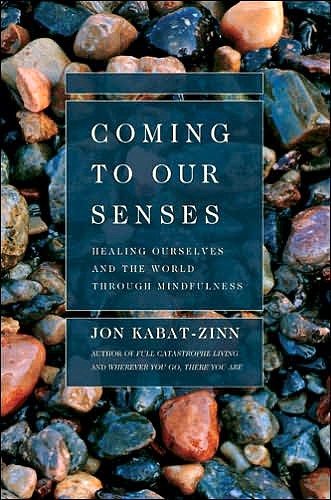
Coming To Our Senses

I haven't read a book in ages. Which is odd for me as I'm a bookaholic. On the Camino I felt like reading hardly anything at all, except my guide book - though, as you know, I was inspired to do a bit of writing. Being bombarded with Spanish all the time could be wearisome - especially since I have no confident grasp of the language. So, for a time, I turned away from the written word, and looked for hidden, unwritten words in outer and inner landscapes, words skulking behind situations and moods, words haunting broken conversations. And often I sank for days into the mire, or the nirvana, of the word-less, which was sometimes scary, and sometimes liberating and peaceful.

But I knew that I would always come back to words, for I love them, and I try to make sense of the world through them. (Though I'm aware, like all instruments of interpretation and perception, words are only a partial way of embracing 'What Is'.) The wonder of words and language is one of our greatest wonders. Words and language make us human.

Needing to engage again with a good, fat book, I picked up Jon Kabat-Zinn's Coming To Our Senses, and I'm very glad I did. There's a saying about the Camino that it doesn't always give you what you want, but it does gives you what you need. Well, I wasn't really sure I wanted to read this book - dammit, it's 600 pages of dense text! - but, sure as hell, I probably do need it right now.

At one time I used to sell a lot of 'Mind, Body and Spirit' titles, various 'alternative', left-field books, and other assorted esoterica to bookshops in the UK, so I've a general, if superficial, knowledge of the subject. In this area it can be difficult locating the diamonds in the dross, separating the charlatans from the real gurus, telling apart those with true spiritual insight from those with just a secular yen to be on Oprah and earn lots of lovely dollars.

Truth to tell, since I came back to England I haven't felt very well for one reason or another. But I feel this might be the very book to banish those post-Camino blues. It's about mindfulness, meditation, Buddhism, awareness, happiness, healing, lovingkindness, yoga, freedom - and anything and everything that's part of the human soma and psyche. Perhaps in reading it I may at last come to some small understanding of my recent, difficult Camino...

Wednesday, 24 March 2010

Camino People (3)


I reached Zafra on Wednesday 20 January. To get there I walked the last few kilometres beside the railway line. An unpromising entrance: dog turds, rubbish dumps, stacked sections of railway track in the ill-kempt station yard. I tried to climb a locked metal gate, but eventually found the right way through. There was a long - a very long - street leading to the town centre. I was tired and wanted a shower, a beer, a bite to eat. I booked into the Hostal Carmen, and was given a lovely double room - with heating! This was more like a nice hotel than a hostal. The first thing I noticed above my bed was this picture - monogrammed 'FW', the initials of my father, who died just over a year ago, and to whom I dedicated this pilgrimage...

Later I found a groovy new bar - with gorgeous, soft red wine de la casa, and tapas to-die-for. The girl behind the bar was the owner of the place, and she was as welcoming as sunshine, smiling and open as summer sunflowers, black-haired and beautiful. She beckoned a regular customer from Barcelona to join me. We talked about this and that, about the Camino, the weather, the town of Zafra - and how it was just like a miniature version of Seville.

And later still, when I came to pay, she told me my Catalan friend - who had left some minutes before - had paid for me. I expressed my gratitude and astonishment. She winked, with an amused look on her face. 'Es España!' she beamed.

Tuesday, 23 March 2010

Camino People (2)

I stumbled into the pueblo late one afternoon. It was cold and had just started raining. It had been a hard day through puddles and mud. I entered one of the pueblo's two bars and put my jacket to dry on a chair in front of the radiator. The architect was already there with a drink and cigarettes. He looked angelic with his curly hair and soulful eyes. I ordered a beer. He told me to go to the priest's house just across the street. 'How would I recognize it?' 'You can't miss it. There's a bloody great cross outside. But don't sleep in the albergue behind the house. Put your stuff in the little room above the kitchen. There are a couple of bunk beds in there, and it's a bit warmer.' So this I did.

Then I didn't know what to do. Outside it was cold, wet and windy. Nothing was happening on the streets. Except paper bags blowing around and the big cross shaking slightly in the wind. Inside it was warmer. But not that much. So I burrowed into my sleeping bag and had a lie-down. This is ridiculous! I told myself. In your sleeping bag at 6 o'clock? So I had a shower, read a book, and tried to write a poem. The priest had invited me to dinner at 9. The minutes seemed to crawl by. Finally at 9.30 the teacher knocked at my door. 'Dinner!'

I joined them all at table in the priest's cosy living/dining room - the architect, the priest, the teacher. And the cook. A fire blazed in a huge open fireplace in one corner. On the table was a platter of beetroot and asparagus, some freshly-made fried eggs, a big bowl of home-made chips, a bottle of wine, a jug of water. 'Help yourself! Tuck in!' All men together. Arms on the table. Smoke between courses. Smoke between mouthfuls! The architect, the priest, the teacher, the cook. And now the pilgrim. (Sounds like that Peter Greenaway film. What was it called? The Cook, The Thief, The Wife And Her Lover? But no wives here. For tonight, this was an exclusively male preserve.)

The cook was wild and extraordinary. He reminded me of a younger version of Father Jack Hackett from the TV comedy series Father Ted. We spoke in a weird hybrid of Spanish, English, French and German. The cook had spent 20 years as a barman serving drinks to the tourists on the Costa Brava. 'Never again!' He fetched some huge chunks of pig meat, which the priest threw on the grill above the hot embers of the fire. It was soon ready. We gorged on the succulent pork and gnawed on the bones. Later we drank strong, black coffee, and the priest disappeared - to reappear with a strong, colourless alcohol in a plastic Coke bottle. We drank. A great evening. A memorable evening. And so to bed...

The next morning I breakfasted with the priest. Melon, oranges, a meat pasty, yoghurt, café con leche. He gave me some fruit and the rest of the meat pasty for my packed lunch. He enquired if I wanted, perhaps, to return as a voluntary hospitalero? He asked for no money. It was free to stay there. (But I left 12 euros in the donation box.) He showed me the rest of the house, the renovations, the old wooden cart which was being restored and repainted. He was a kind man, a good man. A very good man. And an intellectual man. His shelves were full of religious books, historical books, books about Don Quixote. Then I stepped outside into the damp, foggy air, and set off once more along the Camino...

It had been yet another unrepeatable, unforgettable night on the Vía de la Plata...

(My photo shows the priest on the left and the cook on the right.)

Tuesday, 16 March 2010

Camino People (1)

The Camino's about self-discovery, and it's also about the discovery of landscape. (The two are interlinked.) Walking long distances over several weeks or months through a particular landscape is a unique experience. There's no more intimate way to explore a country, and to understand it, than when its earth is under your boot soles. The relatively slow pace of walking is just the right speed - not too fast so you miss things, not too slow so you get bored.

I love walking. For me it's a near perfect activity. I've found places and seen things while walking you would never, ever find or see if journeying by car - or even by bike. I feel privileged. But, as well as the landscape (which may be beautiful or scarred, mundane or marvellous - it's all part of the Camino), there are the people populating that landscape, and this is the most important thing of all...

It must be said that the people along the Camino are a pretty amazing bunch. OK, as in life generally, they're not all kind and friendly and helpful. But many of them are. You'd be amazed how many times when you're lost at some crossroads, with no scallop shell or yellow arrow in sight, a 4 x 4 pulls up in a cloud of dust (you may not have seen any other vehicle for hours) and someone jumps out and indicates the right way. Not only that, but that someone often wants to know all about you, where you've come from, where you're going, and leaves you with a pat on the back and a warm 'Welcome to Spain, peregrino!'

In any remote pueblo, if you're dithering before two turnings, wondering which way's the exit from the village, you can bet your life shutters will rattle, and some incredibly old Spanish lady will silently gesticulate, and point out the correct path. It happens all the time...

The people along the Camino are its very heart and soul. Here are a few of them I met on my recent trip. This is the indomitable Elena from the Bar Ruta de la Plata in Carcaboso...


Women rule the bars in Spain. While the bar owner is smoking, chatting and playing cards, his wife will be dashing hither and thither, carrying four glasses in each hand, multi-tasking like mad, yet still managing to greet every customer, control any boisterous drinkers, heat up some tapas in the microwave, sell some lottery tickets, switch on the cigarette machine with the zapper, and bang down 20 saucers - with spoons and sugar sachets - on the counter, in preparation for the next wave of coffee addicts...

On Sunday 31 January I entered Carcaboso's Bar Ruta de la Plata completely exhausted. I summoned what little Spanish I could muster, and asked about rooms and prices and all sorts of ridiculous things that for some reason seemed important to me at the time. Elena's son, who helped run the bar, inspected me with amusement. 'Tranquilo!' he said. 'Tranquilo!' he repeated, as he helped me off with my backpack. He placed a beer, and some nuts and sunflower seeds, in front of me. 'Tranquilo! Tranquilo!' Later they found me a room, and showed me where I could eat, and Elena spent half an hour drawing a map of the next day's route, and in the morning she made me a lovely packed lunch...

And this is Mañuela, the hospitalera at the private albergue in Calzada de Béjar. I was the only pilgrim there, but she spent ages lighting and tending to a wood burning stove (though it was still freezing in the dormitory), and later preparing a meal from scratch - simple chicken soup, then a tortilla de patatas, but all home-made and delicious...


And here's Mari Carmen de la Iglesia from the new Casa Rural (called VII Carreras) in San Pedro de Rozados, one of the nicest places I stayed. The welcome was warm. The tapas at the bar were tasty - spiced black sausage (morcilla), tortilla, croquetas... The rooms were superb - all individual, with hot showers and radiators (made a change from all the nights I'd shivered in my sleeping bag in the freezing cold), a smart tiled floor, a comfortable bed. As soon as I arrived Mari Carmen asked me if I wanted any washing done - which she did free of charge in her washing machine. And later I had excellent fish soup... (Chicken soup? Now fish soup? Do pilgrims drink soup all the time? Well... yes! Camino lovers will know what I mean...)


Finally, here's pilgrim Agustin, the master chef from Sunday's post, king of the chorizo, sovereign of the sausage, prince of the pork fat...

Monday, 15 March 2010

When In Doubt, Blame The Weather!

I've been trying to assess the significance of this latest Camino and the effect it's had on me. But I can't. As usual, no doubt, these things will reveal themselves slowly over time. But I'm certain of one thing: it was hard.

Which is interesting. Because, in some ways, you might at first think my other two Caminos were more testing - with a heavier backpack, ill-fitting boots, and steeper, more numerous ascents and descents. This time my pack was lighter, my boots were comfortable and problem-free (though they did let in water and started to come apart towards the end), and the terrain was relatively flat.

I think the difficulty lay in the time of year at which I walked. (I had no choice but to go in January and February, by the way.) My first two Caminos were done in the autumn/early wintertime. There was very little rain, and the days were bright and sunny - perhaps cold to start with, but often warming up late morning, particularly in the French sections.

On this Camino I walked through a Spain that was undergoing one of its worst winters for years. Rain had drenched the land, making some tracks waterlogged and some streams impassable. It's tiring to concentrate hour after hour just on where to put your feet. And, apart from a few mild days in Andalusia at the beginning of the trail, it was cold. It grew colder and colder the further north I travelled. There were days of blue skies, as my videos show - but it gradually got colder, and wetter, and foggier, and windier, the nearer I approached Galicia.

What finally did it for me was overnight snow at Padornelo - which meant 20 miles of road walking to the next hostal, as the path was blocked. And even the road was no easy option. I was slipping and sliding in the slush. At one point a Guardia Civil police car stopped and asked if I was OK. And did I want a lift? Naturally, I refused!

Right, they're the negative bits out of the way. Let's get on to the positive bits. I think you're going to be surprised, for I had some truly heart-warming experiences...

Sunday, 14 March 2010

Food And Love

The subject of food's a strange and fascinating one, isn't it? I've been occupied with it lately while experimenting with various different recipes at home. And thoughts of food loomed large on my recent Camino trip. Because the weather was challenging, and because I was on my own much of the time, I used food and drink as things to look forward to each evening: a reward for my efforts, a kind of comfort blanket. On my other Caminos I've always lost weight - half a stone or more. But not on this one.

There are two relentless, unignorable animal hungers in our lives, and one of them's to have our stomachs filled. (The other one is the irrepressible, primeval desire - to go ballroom dancing! I joke, of course...)

Food can be a joyous thing. But it's not actually about fancy restaurants, complicated recipes, complex, diverse or expensive ingredients, culinary knowledge, technique and skill, dinner party one-upmanship, celebrity chefs in hot competition with each other. No, it's not about these things at all.

Occasionally I've eaten in a posh restaurant or two - when I worked in publishing - and sometimes they're good, but often they can be disappointing. If I was paying for myself, I'd rather spend the money elsewhere. Also, it can sometimes seem rather obscene to be sitting there debating whether you want the pan-fried pigeon or the pancetta-wrapped tuna - when much of the world is struggling to survive on seeds and roots.

No, at heart, mealtimes aren't really about food, are they? Food's the peg to hang them on - but really they're much more about sharing, companionship and conversation. They're certainly not about competition.

The value of food is nothing to do with money. It's nothing to do with the food's scarcity, or complexity, or diversity, or subtlety. It's simply to do with the love that's been put into preparing it. And that's all. Really it is.

A few weeks ago, in the albergue at Tábara, a Spanish pilgrim called Agustin I'd met insisted on making us both a meal. We shopped for the food together. It was fun. Later he fried, in very hot oil, chunks of chorizo and salted belly pork, then added a tomate frito sauce from a carton (Why can't we get this in the UK? Perhaps we can and I just haven't noticed). We accompanied it with heaps of al dente spaghetti and a bottle of red wine. And it was one the best meals I've ever had in my life.

Love and companionship...

Friday, 5 March 2010

A Passion For Birds

I'm no expert ornithologist - truth to tell I'm expert in very little - but I do have a keen, general, amateur interest in nature and wildlife, particularly in birds. I remember developing this passion at a very young age. My first bird book - which I still own and have written about here - was called The Observer's Book Of Birds, published in a revised edition by Frederick Warne in 1964. (It originally came out as early as 1937, and was the very first book in the Observer's Pocket Series.) However, although its illustrations (by Archibald Thorburn and other well-known bird artists) were absolutely lovely, it must be acknowledged they were hardly the most ideal aids to identification. Half were in black and white for a start - just about OK for the magpie or oystercatcher, but of little use for the goldcrest or shoveler duck.

Still, with its modest help, and a pair of my mother's unwieldy, brown-leather-cased, 1950s binoculars (which verged on the useless, having little depth of field and desperately poor magnification), I gained a rudimentary knowledge of the commoner garden, woodland and streamside birds, and soon hankered after spotting some of the rarer, migrant, more exotic species on the British list, such as the golden oriole and the hoopoe. So I was completely thrilled to see, for the first time in my life, not just one hoopoe, but several of these stunning creatures, on my walk along Spain's Vía de la Plata...


The southern half of Spain and the tip of north-west Africa is where you'll find these colourful, beautifully marked birds in the winter - though in the breeding season they migrate into much of mainland Europe. The ones I spied were either flying jerkily from one holm oak to another, or feeding in the grass beneath the trees. I mostly only got brief sightings rather than uninterrupted views, for they're rather shy. Usually they're swooping, woodpecker-like, away from you, and you just get a tantalisingly brief glimpse of those broad, raggy-edged, black and white wings, and that wedge-shaped, black and white tail.

A bird that used to be quite common in the UK is the lapwing, aka peewit, aka green plover. Nowadays there are far fewer than there used to be, due to the draining of wet areas and the cultivation of marshy farmland. But in Spain I saw more than I've ever seen previously - hundreds if not thousands of them - making the most of the rough, uncultivated Spanish pastures which had been deluged with rain over the past few months. It was a delight to see them, and to see them in such numbers, for they're gorgeous birds...


For the first half of my walk along the Vía de la Plata, through Andalusia and Extremadura, birds were my constant companions. I heard birdsong all the way - finches, buntings, tits, larks, all sorts of other small birds I couldn't identify - though this gradually lessened as I went further north into the higher, colder region of Castilla y León. Storks were commonplace - unmistakeable with their clacking bills, broad black and white wings, and huge untidy nests on the tops of telegraph poles, electricity pylons and church bell towers. There were egrets - mainly cattle egrets - in fields full of cows, or standing in isolated meditation by some pool or other. Birds of prey were a daily occurrence - lone red kites with their forked tails silently gliding across vineyards, golden eagles drifting over rocky cliffs and bluffs.

One day a group of twelve Egyptian vultures flew straight over me (they'd been circling and scavenging above a nearby motorway) - very easy to identify with their black and white underwing markings, white heads and diamond-shaped tails. Unlike griffon vultures, whose numbers have been increasing, Egyptian vulture numbers have been declining, so I was lucky to see them, though I think more and more are overwintering in Spain because of global warming...


But best of all were the cranes. They're present in parts of southern and central Spain all winter long. First of all I heard them - a loud, jarring, trumpeting cacophony - and then I saw them, a large flock taking off from a wide, open grassy space where they'd been feeding beneath the holm oaks. Soon the sky was chock-full of hundreds of cranes, their necks and legs outstretched, climbing higher and higher, soaring into the blue. I must have heard them for almost an hour as I walked through that sublime grassland region - strewn with oak trees, fringed with snow-capped mountains - which lies just south of the small town and thermal spa resort of Baños de Montemayor.


Yes, birds... Pure magic! Life would be immeasurably the poorer without them. And the countryside so funereally quiet...

Wednesday, 3 March 2010

The Rain In Spain


So my Camino is done. I'd like to have walked the whole way, but in A Gudiña (which lies just inside Galicia and is fourth-fifths the distance between Seville and Santiago) I decided to battle with the elements no longer. I'd had snow which had completely blocked the Camino for a day. I'd had rain - persistent rain bucketing down day and night - which meant swollen streams had to be crossed. The stepping stones - if there were any stepping stones - were often deeply submerged. So much of the time I had wet feet - not a good combination with the extreme cold. I don't mind too much wet weather if it's warm, or cold weather if its all sun and blue skies. But the cold and wet together, often with a head wind too? No, thanks! (My gear had generally been OK, but my boots were deteriorating - and letting in water - and my overtrousers were also letting in water. I'd bought the trousers far too cheaply, and they weren't adequately rainproofed - a lesson to be learnt there!)

The weather forecast for this whole last week was uniformly awful for much of Spain. The country is in the grips of one of its worst winters for years. It had been deluged with rain in December and much of January - particularly in the south - and now this was continuing throughout February. Snowfall had been unusually heavy in the north, and it had even snowed in parts of the south which never normally see any snow. There had been bad storms and flooding in places like Cádiz, Jerez and the Canaries. Bridges had collapsed. Motorways had been shut for a while. Homes had been destroyed. The mighty Guadalquiver river had burst its banks east of Seville.

It was through such saturated countryside that I walked, so it was never easy from the start. Twice early on I had to turn back from rivers which were unfordable and seek an alternative route by road. I would spend a large part of each day just concentrating on the path before me - avoiding the deep, muddy bits where I'd sink in up to my ankles, skirting huge pools by clinging precariously onto the barbed wire fences or stone walls which edged the track. (Read Rebekah Scott on the Spanish weather here and here.)

So, in A Gudiña, I took a train to Ourense, and looked out over the lovely Galician countryside from the railway carriage window - little bright green fields enclosed by stone walls, densely forested hills. And rain. Lots of it! I spent a night in Ourense...


... and the next day took another train to Santiago. (In Santiago I heard there'd been a landslide in Ourense and that the river there was now dangerously high.) Though not even the rain could dampen my spirits on seeing Santiago Cathedral again. It's magnificent. One of my favourite buildings anywhere. Its Baroque western facade is one of great religious and architectural sights of Europe. Some cathedrals leave one feeling cold and unemotional - the interiors are so vast and ornate. Yet despite its hugh dimensions - inside it's high but narrow - this cathedral has a feeling of intimacy.


Here's my last scallop shell - set in a stone slab in the Plaza del Obradoiro, the impressive square which lies at the foot of the cathedral steps. I'd walked 800 km from Seville to A Gudiña over 40 days. That's an average of 20 km a day (though 7 of these days were for rest and exploration - when I'd stayed an extra day or 2 in historic cities such as Mérida or Cáceres, Salamanca or Zamora. I'm very glad I did this. It's not good to rush on all the time.) So my actual walking average - over 33 proper walking days - was just over 24 km a day. My walking speed averaged out at about 4 km an hour (5 km an hour if the going was good and I felt like pushing on; 3 km an hour if I was taking lots of photographs and felt like sauntering and stopping to look at things.)

Wednesday, 24 February 2010

Thoughts On The Camino

It's not the Catholic, guide book destination of the Camino (ie Santiago) that actually matters. The real destination is the place you yourself are destined to reach (ie in my case A Gudiña). Or the destination may not be a physical one at all - it may be a symbolic or a metaphysical one.

You can never finish the Camino anyway. It goes on for ever.

The Camino is not about winning or conquering, mastering or accomplishing, gaining or completing anything, in the sense of struggling to achieve a goal (ie reaching Santiago) and then feeling good about it. Well, not necessarily.

The Camino is about each day, hour and minute being your destination. Only if you believe this with all your heart and soul will you truly understand the essence of the Camino.

The Camino is not at its core about the French Way, the English Way, the Ruta de la Plata, the Ruta del Norte. It's not even about walking. (Just as this blog isn't really about walking.)

The Camino is about exploring and experiencing the heart's truth.

Do I sound convincing?

Friday, 19 February 2010

Carlos And Anita

I caught up with them on the way to the next refugio. Let's call them Carlos and Anita. We all paused for a rest by some rocks on the bleak, saturated grassland above the pueblo. Carlos rolled a cigarette. Anita looked tired. She was limping - the result of some knock with a car just north of Seville. She had a persistent cough. Their packs were much too heavy, for they carried a tent, and had sometimes slept in it.

We met up again later in the refugio. We talked in broken Spanish and broken English. They were Spanish pilgrims from Alicante. They'd begun the Camino in Seville on 1st January and were walking slowly, poco a poco, from one albergue to the next. They were two of a growing band of the working-class Spanish unemployed. Why sit around waiting for a job that doesn't exist? So they'd set off on the Camino.

The refugio was small and spartan, with no kitchen. It was cold. Very cold. There were several bunk beds with mattresses, but precious few blankets. There was a shower with hot water, and a radiator, but it gave out little heat.

We shared what meagre food we had. They insisted I took some of the huge bocadillo they'd prepared from tinned fish, lettuce and mayonnaise - the cheapest ingredients. Carlos had flattened and warmed the bread on the radiator. It was delicious. We were ravenously hungry.

They had little money, and stayed only in the free or donation-only albergues, always buying their own food, never able to afford to eat out. Sometimes they ate no hot food for days. They were poor, but they were happy. They loved the whole of the Camino, all its landscapes and all its aspects, despite the hardships - the cold, the damp, the heavy backpacks.

Later they snuggled up together in their clothes under a blanket on a single mattress, and talked and giggled quietly, until their voices became softer and softer, and we all fell asleep in the icy darkness.

They were proud, spontaneous, child-like, happy. For me, that night, they were the very heart and soul of the Camino. I was only playing at the vagabond life. They were living it for real.

They were some of the sweetest, kindest, most generous people I have ever met.

(Posted from Puebla de Sanabria, on the Camino Sanabrés, Spain.)

Friday, 12 February 2010

North From Salamanca

A dark-green, dirt-brown landscape - so flat I feel, weirdly, I'm falling into the sky. Strip after strip of maize, long-harvested, stalks dry and decayed; the bright green shoots of other cereals pushing through; small plots of black, twisted vines; empty hectares where sunflowers bloomed in the summer.

The Camino: a long, straight track, sandy and puddled, stretching from horizon to horizon. Wheeled, tubular irrigators, abandoned for the winter, span the fields like giant metal insects, or like lines of aeroplanes parked wing-tip to wing-tip. A light aircraft buzzes across, then flies back even lower. I feel like Cary Grant in the crop-sprayer scene from Hitchcock's North By Northwest.

The only verticals are electricity pylons, church bell towers and me, a tiny speck of pilgrim, battling northwards against the wind and hail. The morning snow's been left behind on the hills beyond El Cubo de la Tierra del Vino. I press on harder, keen to escape black clouds rolling in from the west. But the rain tips down. The track becomes yet muddier. I slip and slide. Over the weeks I feel I've had half the earth of Spain sticking to my boots. There are few trees here, few birds - just a solitary kite which spirals up, then glides off silently into nothingness.

Leaving one village, I see the next one crouch between earth and sky ten kilometres in the future. These are ordinary, back-country pueblos of concrete-surfaced streets and low houses of plaster, brick and stone. At the village boundaries half-built houses gape forlornly. Scrappy little trees grow in containers improvised from car tyres and plastic fertilizer tubs. The recession has hit Spain hard.

They call it Spain's bread basket here. I call it Kansas - but with shrines and saints. Or Lincolnshire - but with decent wine and olives.

(Posted from Zamora, on the Vía de la Plata, Spain.)

Salamanca Blues

I'd spent the weekend in the fine old city of Salamanca. I'd been there once before, when I was 18, on an Inter-Rail ticket round Europe. I found the stone bench next to the New Cathedral - where I'd slept early one morning 37 years ago - was still there.

On this visit, however, I was very down. Some personal reasons aside, I think my depressed mood had something to do with being in a big city for a few days. It felt odd after the isolation, and the peace and quiet, of the countryside. I felt like a stranger on the outside looking in. Which, of course, is what I was. A pilgrim feels much more at home in the smaller towns and villages, I believe. I'd persuaded myself my pilgrimage had ended there and then. That it was perfectly OK to finish half-way. After all, if I hadn't been lucky enough to have such a long period of free time at my disposal, I'd have had to have ended it short of Santiago anyway. Wouldn't I?

I lingered in Salamanca until the Monday. I'd been blogging on and off all that day - making the most of easy Internet access - and decided to check my blog one last time before I turned in for the night. There I found an encouraging comment from Andy (Pilgrimpace), which quoted part of my poem Camino Fever: How dark the soul in the dead of night! But how bright the morning sun! Incredibly, and in an instant, my depression lifted, and my whole mood and attitude changed. I'd bought a train ticket to Hendaya (on the Spanish/French border) in the morning, intending a slow train ride home via Bordeaux and Paris. I tore up the ticket on the spot. I would continue the pilgrimage. Of course I would. What on earth were my minor discomforts - the cold, the wet, the odd pang of loneliness - compared, say, with Winter Pilgrim's challenges as she trekked through the Ukraine winter from Kyiv to Patras in Greece? The way she coped with any difficulties - with good humour and light-heartedness - was a shining example when faced with my own wimpish behaviour.

The next day, light of heart, I pressed on northwards towards Zamora.

(Posted from Zamora, on the Vía de la Plata, Spain.)

Sunday, 24 January 2010

Flamenco Dancer, Seville

The singer´s voice quavered and droned, thin and nasal like a muezzin´s. Jazzy chords spilled from a guitar: major then minor, fast then slow, confident then unresolved; cool and dark as a shaded courtyard in old Seville. Suddenly the dancer, Ascunción Pérez - dressed in red and black, with flashing eyes and jet black hair - strode quickly through a high doorway and mounted the small, wooden stage on the patio of the 18th century palace which is the Casa de la Memoria. All three - singer, guitarist, dancer - were young, local artists from Seville, performing flamenco in a modern style: fresh, unsentimental, but still firmly rooted in the old tradition. This was the real thing - not the castanet-clicking touts chasing the quick euro, nor the rough amateurishness you get from the hillside cave-dwellers above Granada. These were three serious students of the dance.

Complex rhythms flowed, faltered, petered out. Then began again, sinuously following a different direction, half-scripted, half-improvised. Hands clapped on the beat, off the beat. The dancer arched one arm over her head and stamped diagonally across the stage, head bent back, her body-shapes changing second by second, fingers stuck out at crazy angles like the tentacles of an octopus. She hitched up her dress, slapped her thigh. She was proud, provocative, defiant, sexy, coy, tragic, strong, yielding, ecstatic; one moment a majestic matriarch, the next a bashful señorita. Studied awkwardness gave way to still composure. She squatted, legs akimbo, as if giving birth - grotesque as a figure from a Paula Rego painting - then became all beauty and grace, like a Velázquez princess.

Her red heels went clack, clack, clack. Clack, clack across the wooden floor, as the tempo rose and quickened. All hands clapped in unison, as faster and faster she twirled and spun in a vision of red and black, in a frenzy of movement. Clack, clack, clack. For a moment she became all the women of Andalusia rolled into one: the smart, Spanish women parading in the gardens of the Alcazár, the Arabic gypsies scraping an existence in the shacks by the Guadalquivir river. At the crescendo she stood face-on to her spellbound audience: stiff, erect and proud; all fire, all heart, all corazón. The house erupted in swift, spontaneous applause. Olé! The lights came on and we shuffled off, mesmerized, as if a dream had ended.

(Posted from Mérida, on the Vía de la Plata, Spain.)

Thursday, 31 December 2009

Vía De La Plata

The Camino Mozárabe or Vía de la Plata.


The route used by the Mozarabic (Christian) pilgrims during the period of Muslim domination and by all those coming from the south of Spain, including those who arrived in Seville by sea from North Africa and other parts of the Mediterranean. Also known as the Vía de la Plata as it follows the course of a Roman road of that name (but note that the name does not mean 'Silver Route': 'plata' is a corruption of an Arabic word indicating a 'broad surfaced road'). As the Camino Francés becomes ever more crowded, we are encouraging first-time pilgrims to chose the Vía de la Plata as a more peaceful, and very beautiful, alternative.

The Route. Starts in Seville and leads north via Mérida, Cáceres, Salamanca and Zamora. After that pilgrims can continue to Astorga and from there to Santiago via the Camino Francés or go there directly through Galicia via Pueblo de Sanabria and Ourense: in either case the distance is 1000 km and it takes, on average, 6 to 7 weeks to walk from Seville to Santiago. Alternatively you can begin in Granada, passing through Córdoba and joining the main route in Mérida.

Waymarking. Yellow arrows throughout, as on the Camino Francés.

Terrain. Undulating and not very taxing as far as Astorga, though the distances between towns/villages are often very long; strenuous after the border of the provinces of Zamora and the entry into Galicia, with many steep climbs and descents (for example the passes of Padornelo (1329m) and A Canda (1262m).

Weather/When to go. Definitely not July or August (i.e. in the south) though the farther north you go the cooler it gets. April - June (especially for the wild flowers) or September-October are the best times.

What to see. Much evidence of Roman Spain (especially in Mérida) and many pilgrim, St. James and other related references, art and architecture along the way.

Accommodation. Few proper refugios but somewhere to sleep (at worst) on the floor with a sleeping bag at least every 30 km. There is also plenty of hostal accommodation, at least every 25 km as far as Mérida, and between 30-35 km after that.

Distinctive features of the route. Very solitary route where you are unlikely to meet many other pilgrims even though it is becoming better known (by people who live along the way too) and better used each year.

Taken from the Confraternity of Saint James website. With thanks.