A common man marvels at uncommon things. A wise man marvels at the commonplace. CONFUCIUS
Showing posts with label Langford Lowfields. Show all posts

Saturday, 20 December 2014

Walk At The Beginning Of Winter

One of the RSPB's newest nature reserves lies on my doorstep. 

This reserve is becoming important for bitterns, water rails, cuckoos, owls, all kinds of duck, and various birds of prey. The top photo on the signboard shows a marsh harrier; the bottom a little ringed plover.

The morning was fine but cold. The leaves had now fallen from the trees and winter skulked around the corner. A low and intense sun turned the reed beds gold and a sharp breeze ruffled the blue water of the old gravel pit lakes.

There were not many birds about; I barely spotted twenty species. But the sun illuminated brilliantly the glossy green heads of mallard and goldeneye and the snowy-white feathers of a mute swan near the causeway.

Inside the delightful wooden 'beach hut', which serves as a tiny reception centre.

On one wall there's a display of 'natural curiosities', including the oak apples (or oak galls) you can see on the right (these would originally have been home to gall wasp larvae).

As I began the walk home, long rafts of cloud blotted out the sun, and it seemed more like early evening than early afternoon.

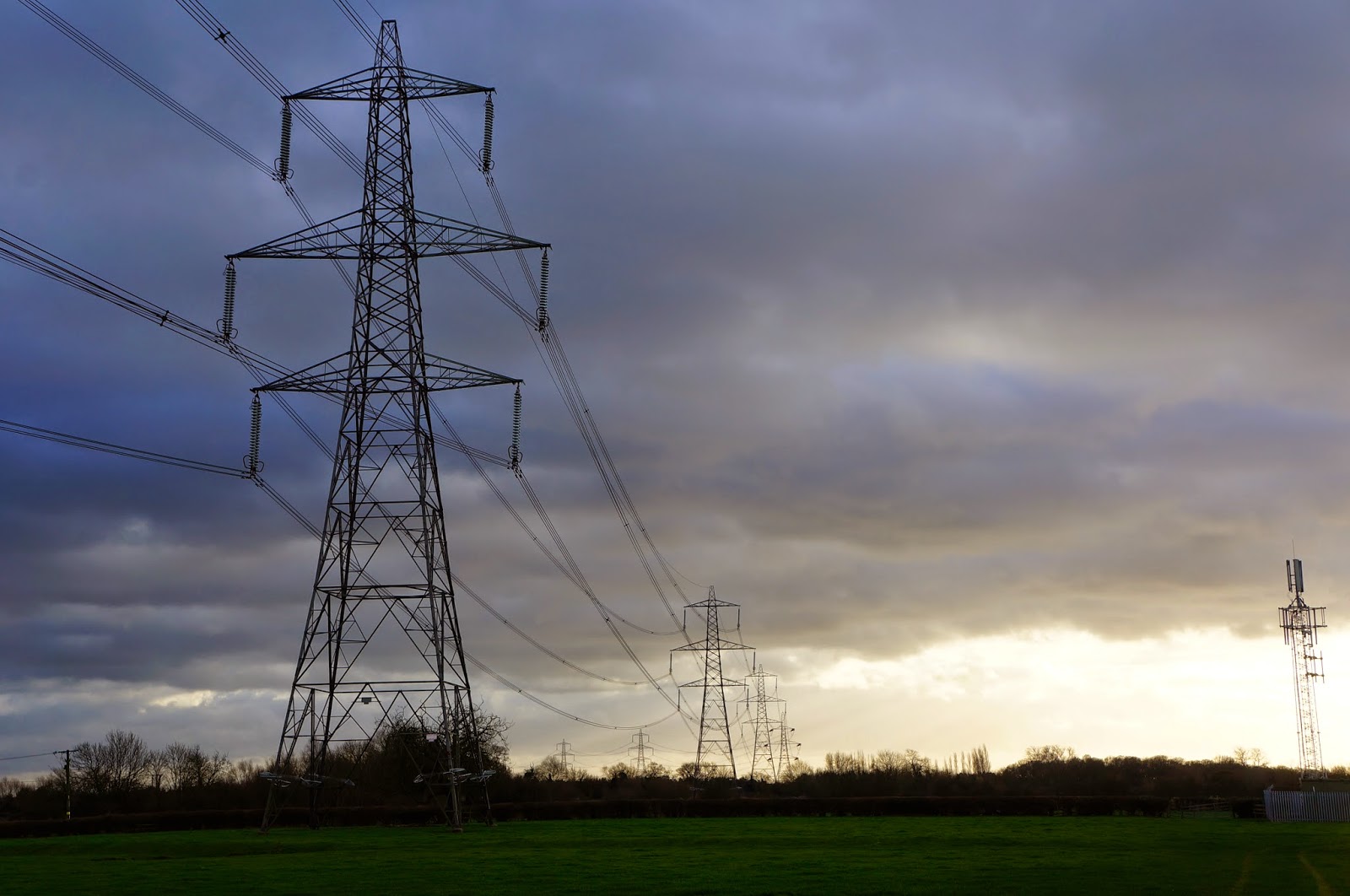
Electricity pylons striding across the flat plain of the Trent valley.

Friday, 20 June 2014

Close To Nature


Earlier in June I walked to Langford Lowfields, my local RSPB reserve. I'm so lucky to have this on my doorstep. Part of it is still a working quarry, but recently some new trails were opened in the northern part of the reserve. 

I made a tally of the birds I saw, 31 species in all:
wood pigeon, swift, swallow, sand martin, jackdaw, blackbird, crow, great spotted woodpecker, mute swan, coot, moorhen, pochard, mallard, shelduck, tufted duck, great crested grebe, pied wagtail, little egret, green plover, common tern, black-headed gull, reed bunting, sedge warbler, grey heron, cormorant, oystercatcher, blue tit, house sparrow, yellowhammer, chaffinch, goldfinch. 
Nothing very unusual, though I did hope to see a bird of prey, perhaps a peregrine falcon or a hobby. Amazingly, a couple of days later I saw a peregrine — spiralling over our garden!
  

The Beach Hut at Langford Lowfields. Volunteers often man this hut to meet and greet.

Friday, 1 March 2013

Birdwatching

Hide at Langford Lowfields.


Today I returned to my local RSPB reserve, Langford Lowfields, which I last visited four weeks ago. The weather was cold and the sky overcast. I thought it would be interesting to make another list of all the birds I saw and compare it with yesterday's; the habitats of woodland, farmland, lake and river were very similar. Twenty-nine different species were recorded, slightly fewer than yesterday. These birds were on both lists:
Wood pigeon, rook, crow, jackdaw, robin, dunnock, blackbird, cormorant, mallard, pochard, tufted duck, wigeon, coot, gadwall, goldeneye, shelduck, grey heron, great tit, blue tit, chaffinch, black-headed gull.
And these were the new sightings:
Magpie, greenfinch, goldfinch, yellowhammer, reed bunting, pintail, mute swan, little egret.
Finches, robins, dunnocks, great tits, yellowhammers and reed buntings were busy at the feeders near the hide. It was great to see a little egret, though these birds are becoming much more common now in the UK. But the highlight for me was a pair of pintails — such strikingly marked ducks, especially the males with their chocolate-brown heads, gleaming white breasts and long, black tail feathers.  

Daffodils emerging through last year's leaves at Langford Lowfields.

Friday, 1 February 2013

Langford Lowfields

Wednesday was a fine but blustery day, and I set off on one of my local walks. Passing this oak tree, I followed an old stone wall... 

... until I came to a three-way junction of paths.

The familiar route took me under power lines...

...  to a small bridge crossing the river Fleet. The floods had largely receded, but a pool of water remained in this ploughed field. A flock of fieldfares rose from the field's edge...

... as I turned up this woodland path. The path is new...

... as is this other bridge over the Fleet. The area is now all part of the Langford Lowfields nature reserve owned by the RSPB.

Near the gravel pit lakes I met up by chance with Jenny Wallace, the warden of the reserve, and we had an interesting chat for twenty minutes. She told me they'd had big problems with the flooding, but the water levels were gradually dropping. She described the insect life, and the butterfly life in summer, and the birds: there are several types of owl here, also reclusive bitterns, and even, if you're lucky, marsh harriers. These summer visitors bred a couple of years ago, and she was hopeful they'd return this year. (You can read Jenny's blog here.)   

Bitterns like reed beds, and there are extensive reed beds on these old gravel workings. The reserve also attracts wildfowl and wading birds.

Before I made my way back along Westfield Lane, I paused on the bank of the river Trent which borders the western side of the reserve. As you can see, the water was still very high.