A common man marvels at uncommon things. A wise man marvels at the commonplace. CONFUCIUS
Showing posts with label Seamus Heaney. Show all posts

Saturday, 21 March 2015

Slime Kings And Mud Grenades

An orgy of frogs in our garden pond today.

Death of a Naturalist

All year the flax-dam festered in the heart
Of the townland; green and heavy headed
Flax had rotted there, weighted down by huge sods.
Daily it sweltered in the punishing sun.
Bubbles gargled delicately, bluebottles
Wove a strong gauze of sound around the smell.
There were dragon-flies, spotted butterflies,
But best of all was the warm thick slobber
Of frogspawn that grew like clotted water
In the shade of the banks. Here, every spring
I would fill jampotfuls of the jellied
Specks to range on window-sills at home,
On shelves at school, and wait and watch until
The fattening dots burst into nimble-
Swimming tadpoles. Miss Walls would tell us how
The daddy frog was called a bullfrog
And how he croaked and how the mammy frog
Laid hundreds of little eggs and this was
Frogspawn. You could tell the weather by frogs too
For they were yellow in the sun and brown
In rain.
Then one hot day when fields were rank
With cowdung in the grass the angry frogs
Invaded the flax-dam; I ducked through hedges
To a coarse croaking that I had not heard
Before. The air was thick with a bass chorus.
Right down the dam gross-bellied frogs were cocked
On sods; their loose necks pulsed like sails. Some hopped:
The slap and plop were obscene threats. Some sat
Poised like mud grenades, their blunt heads farting.
I sickened, turned, and ran. The great slime kings
Were gathered there for vengeance and I knew
That if I dipped my hand the spawn would clutch it. 

SEAMUS HEANEY

Monday, 9 December 2013

Nelson Mandela (1918-2013)

Much of the literature of the past century is a de profundis on behalf of the desperate and the deprived in gulag or ghetto or township or camp, but in spite of its desolate content that literature has been a positive influence: it has had the paradoxical effect of raising spirits and creating hope. We need only think of Aleksandr Solzhenitsyn to remind ourselves how the integrity of an individual writer can underwrite a whole culture of resolution and resistance. It can even underwrite a new idiom of affirmation, like the one employed in the United Nations declaration 'Tolerance and Diversity: A Vision for the 21st Century.'

The document is direct: 'The horrors of racism — from slavery to holocaust to apartheid to ethnic cleansing — have deeply wounded the victim and debased the perpetrator. These horrors are still with us in various forms. It is now time to confront them and to take comprehensive measures against them.' The document further declares that 'we all constitute one human family' and asserts a new scientific basis for this belief by invoking the proof afforded by the mapping of the human genome. Yet the scientific reinforcement of the argument remains just that: reinforcement. Its primary strength comes from moral and philosophical sources, from the witness of heroic individuals to the belief that human reason is indeed beautiful and invincible.

When we see the signature of Nelson Mandela at the bottom of the declaration, it immediately acquires a kind of moral specific gravity, for the name Mandela, like the name Solzhenitsyn, is the equivalent of a gold reserve, a guarantee that the currency of good speech can be backed up by heroic action. There is nothing loose-mouthed involved. When Mr. Mandela's writing rises to a noble statement, that statement has been earned. It has behind it the full weight of a life endured for the sake of the principles it affirms.

Consequently, there is genuine healing power rather than mere rhetorical uplift in Mr. Mandela's espousal of the aims of the Durban conference, and the conference could well adopt as its sacred text something he wrote in his book, Long Walk to Freedom: 'It was during those long and lonely years that my hunger for the freedom of my own people became a hunger for the freedom of all people, black and white. I knew as well as I knew anything that the oppressor must be liberated just as surely as the oppressed. I am not truly free if I am taking away someone else's freedom, just as surely as I am not free when my freedom is taken away from me. The oppressed and the oppressor alike are robbed of their humanity.'

Seamus Heaney (1939-2013), speaking at the 2001 World Conference against Racism, held in Durban, South Africa.

The following was one of Nelson Mandela's favourite poems, a poem he used to read to his fellow prisoners and ANC activists while incarcerated on Robben Island.  
Invictus

Out of the night that covers me,
Black as the Pit from pole to pole,
I thank whatever gods may be
For my unconquerable soul.

In the fell clutch of circumstance
I have not winced nor cried aloud.
Under the bludgeonings of chance
My head is bloody, but unbowed.

Beyond this place of wrath and tears
Looms but the Horror of the shade,
And yet the menace of the years
Finds, and shall find, me unafraid.

It matters not how strait the gate,
How charged with punishments the scroll.
I am the master of my fate:
I am the captain of my soul. 

WE Henley (1849-1903)

Wednesday, 4 September 2013

No, I'm Not Afraid

Reading Seamus Heaney's last words, Noli timere, reminded me of the Russian poet Irina Ratushinskaya's book of poems, No, I'm Not Afraid. I've just pulled it down from the shelf. 

In March 1983 Ratushinskaya was sentenced to seven years' hard labour and five years' internal exile for writing and disseminating her own poetry. She joined other Russian prisoners of conscience in suffering almost unbearable degradation. She managed to survive this unjust ordeal, but had to endure beatings, force-feeding, solitary confinement and many more humiliations. Both the writers' organisation, International PEN, and Amnesty International publicised her plight and chivvied for her release, which eventually came after three and a half years, on the eve of Ronald Reagan and Mikhail Gorbachev's 1986 Icelandic summit.

Tell me the truth

'Tell me the truth, gypsy woman,
Why have I dreamt of the wind?'
'Falsehood. He loves you.
But to dream of the wind means a journey.'

'Tell me, gypsy woman, the truth —
Is our fate to be found in my palm?'
'Give me your hand. He loves you.
But this means a long journey.'

'Gypsy woman, tell me, why
Has our candle burnt down?
'That means a parting soon
And the very longest journey.'

'Gypsy woman, tell me that this
Isn't true! Tell me, gypsy woman,
That it isn't that journey!'
'Don't be afraid. He loves you.'

IRINA RATUSHINSKAYA

Translated by DAVID MCDUFF

Tuesday, 3 September 2013

Don't Be Afraid

All I know is a door into the dark. SEAMUS HEANEY The Forge

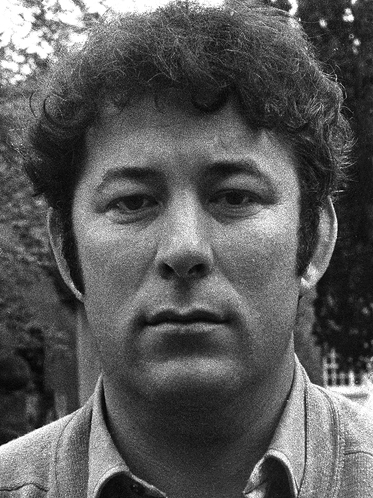
Apparently Seamus Heaney's last words to his wife, Marie, sent to her in a text message just minutes before he died, were: 'Noli timere' ('Don't be afraid'). I find this so rich, so caring, so poignant. He's telling her: 'Don't be afraid for me. And don't be afraid without me. And don't be afraid of your own death. It's all right.' And he writes in Latin, a language he loved. All this I find incredibly moving.

Wednesday, 20 July 2011

Sligo And Yeats Country

It was somewhere near Matt Molloy's Bar in Westport that I encountered 'Poppy' ...


... and later Seamus Heaney - well his photo - in Hargadon's Bar and Restaurant, Sligo Town ...


Hargadon's has a fine, authentically restored interior ...


After all these heady sensual and intellectual delights, it was a relief to stroll round the wonderfully ordinary, untouristy town of Sligo. Most visitors fail to stop at Sligo in their rush from Galway to Donegal. Which is a pity, as there's much to see. Such as the Yeats Memorial Building, home of the Yeats Society. We spent a very interesting couple of hours in this delightfully old-fashioned place. Upstairs were a few paintings by Yeats's incredibly talented brother, Jack. But most of the time we just walked about, admiring the old bridge ...


... the river Garavogue ...


... the Yeats statue near the Ulster Bank ...


... and the river Garavogue again ...


Not sure about the Glasshouse Hotel, though this is an award winning design ...


Many of Yeats's poems were inspired by features in the Sligo landscape - such as the iconic mountain of Ben Bulben just north of town, and Lough Gill to the south with its Isle of Innisfree ...

Saturday, 11 July 2009

Digging


Digging

Between my finger and my thumb
The squat pen rests; as snug as a gun.

Under my window a clean rasping sound
When the spade sinks into gravelly ground:
My father, digging. I look down

Till his straining rump among the flowerbeds
Bends low, comes up twenty years away
Stooping in rhythm through potato drills
Where he was digging.

The coarse boot nestled on the lug, the shaft
Against the inside knee was levered firmly.
He rooted out tall tops, buried the bright edge deep
To scatter new potatoes that we picked
Loving their cool hardness in our hands.

By God, the old man could handle a spade,
Just like his old man.

My grandfather could cut more turf in a day
Than any other man on Toner's bog.
Once I carried him milk in a bottle
Corked sloppily with paper. He straightened up
To drink it, then fell to right away
Nicking and slicing neatly, heaving sods
Over his shoulder, digging down and down
For the good turf. Digging.

The cold smell of potato mold, the squelch and slap
Of soggy peat, the curt cuts of an edge
Through living roots awaken in my head.
But I've no spade to follow men like them.

Between my finger and my thumb
The squat pen rests.
I'll dig with it.
SEAMUS HEANEY From Death of a Naturalist (1966)
I don't think anyone who's been reading my Ur-posts lately will fail to realise the significance of this poem for me. Written early in Heaney's poetic career, this is an archetypal poem about the practical father and the literary son. The differences - and the connections (the 'living roots') - between them.
Seamus Heaney is one of my very favourite poets. I love both his poetry and his critical essays. He's certainly one of the finest writers of my generation. In 1995 he was awarded the Nobel Prize in Literature. Here's his wonderful Nobel lecture. Do read it.