A common man marvels at uncommon things. A wise man marvels at the commonplace. CONFUCIUS
Showing posts with label Spain. Show all posts

Sunday, 22 September 2013

St John Of The Cross And St Teresa Of Ávila

To reach her desired goal, the soul in love needs to go out at night when all her household members are sleeping. ST JOHN OF THE CROSS

There is a time for penance and a time for partridge. ST TERESA OF ÁVILA

I'm interested in the history of religion, and lately I've been making my way through two classics of Christian mysticism: Dark Night of the Soul by St John of the Cross (1542-1591) and The Interior Castle by St Teresa of Ávila (1515-1582).

John and Teresa were contemporaries in 16th-century Spain. Both were members of the Carmelites, both experienced mystical visions which they described either in poetry or prose, and both were persecuted by the reactionary Catholic authorities of their day: the traditional Carmelites and the Spanish Inquisition. Together they sought to reform the Carmelite order to which they belonged; it had become lax and worldly, divorced from its pure and simple roots. Forming the monastic order of Discalced (or Barefoot) Carmelites, they advocated a return to a simpler and more rigorous regime of poverty, abstinence, seclusion, and solitary prayer and meditation. Monasteries and convents were established in many places in Spain, including Toledo, Palencia, Seville, Salamanca, Burgos, Seville and Granada.  

The Ecstasy of St Teresa by Bernini.
Some interesting facts about John and Teresa. On 2nd December 1577 John was imprisoned in the Carmelite monastery at Toledo. His jail was a cell measuring ten feet by six, and he was subjected to public lashings at least once a week. To eat and drink he was given only bread, water and scraps of salt fish. He managed to escape after nine months' captivity, and was nursed back to health by Teresa's nuns.

Teresa herself was a rounded and complex character with a fascinating psychological makeup. Apparently she was a tough negotiator and hard-headed business woman, who did not suffer fools gladly. She liked a good meal and a good laugh — yet was a mystic too. (In some strange way, her mysticism seems more authentic to me because of these very human qualities, this mixture of worldliness and unworldliness.) Her first visions of divine mystical union emerged during a period of great illness. In one of these visions a seraph repeatedly plunged a long golden spear into her heart and entrails: The pain was so great, that it made me moan; and yet so surpassing was the sweetness of this excessive pain, that I could not wish to be rid of it... It's hard not to give a sexual interpretation to this experience. In the 17th century, Bernini's sculpture, The Ecstasy of St Teresa, was inspired by her vision. I've actually seen this great Baroque masterpiece in reality — it stands in the church of Santa Maria della Vittoria in Rome — and it's charged with an intense sensuality and eroticism.

I haven't the space, or the theological knowledge, to comment in detail on Dark Night of the Soul (which is John's commentary on his poem Songs of the Soul) and The Interior Castle. Suffice to say, I read the former in the Mirabai Starr translation, which is quite loose and modern, and reads well, though I'm not sure of its accuracy, and it's quite repetitious — though I suppose that's the point. Teresa's book I found more difficult to read, and I must say I skipped a lot of it. Both books are similar in that they describe the pathway to divine union with God in terms of a progressive, linear structure, in John's case via the rungs of a ladder, in Teresa's case through the rooms (or mansions) of a castle, which is her metaphor for the soul. A mystical vision is more or less impossible to describe in words — the very experience is, by definition, ineffable — so the climaxes of both books are inevitable letdowns.

As you can read below, our spiritual lives haven't changed much since John's time...

Oh, what a difficult life this can be! We live in such danger and it is so hard to find the truth! What is clear and true we experience as opaque and doubtful. We flee from what we need the most. We embrace whatever fills us with satisfaction and run after the worst thing for us, falling down with every step. What danger we live in! The light of our natural eyes is supposed to be our guide, but it is the first thing to mislead us on our journey to God. What we have to do is to keep our eyes shut and walk the path in darkness if we want to be sure where we are going and protect ourselves from the enemies of our house, which are the faculties of sense and reason.

ST JOHN OF THE CROSS Dark Night of the Soul   

Thursday, 2 May 2013

The Priest And The Cook

In a recent post on her blog Big Fun In A Tiny Pueblo, Rebekah Scott — writer and hospitalera from Moratinos — mentions meeting up with Don Blas, the legendary Camino enthusiast and priest of Fuenterroble, a parish midway along the Spanish Vía de la Plata. I wrote this about my own encounter with Don Blas in February 2010.

I stumbled into the pueblo late one afternoon. It was cold and had just started raining. It had been a hard day through puddles and mud. I entered one of the pueblo's two bars and put my jacket to dry on a chair in front of the radiator. The architect was already there with a drink and cigarettes. He looked angelic with his curly hair and soulful eyes. I ordered a beer. He told me to go to the priest's house just across the street. 'How will I recognize it?' I asked.
'You can't miss it. There's a bloody great cross outside. But don't sleep in the albergue behind the house. Put your stuff in the little room above the kitchen. There are a couple of bunk beds in there, and it's a bit warmer.'
So this I did.

Then I didn't know what to do. Outside it was cold, wet and windy. Nothing was happening on the streets. Except paper bags blowing around and the big cross shaking slightly in the wind. Inside it was warmer. But not that much. So I burrowed into my sleeping bag and had a lie-down. 'This is ridiculous!' I said to myself. 'In your sleeping bag at 6 o'clock?' So I had a shower, read a book, and tried to write a poem. The priest had invited me to dinner at 9. The minutes seemed to crawl by. Finally at 9.30 the teacher knocked at my door. 'Dinner!'

The priest and the cook.

I joined them all at table in the priest's cosy living/dining room: the architect, the priest, the teacher — and now the cook. A fire blazed in a huge open fireplace in one corner. On the table was a platter of beetroot and asparagus, some freshly-made fried eggs, a big bowl of home-made chips, a bottle of wine and a jug of water. 'Help yourself! Tuck in!' All men together. Arms on the table. Smoking between courses. Smoking between mouthfuls! The architect, the priest, the teacher and the cook. And now the pilgrim. Sounds like that Peter Greenaway film. What was it called? The Cook, The Thief, The Wife And Her Lover? But no wives here. Tonight this was an exclusively male preserve.

The cook was wild and extraordinary. He reminded me of a younger version of Father Jack Hackett from the TV comedy series, Father Ted. We spoke in a weird hybrid of Spanish, English, French and German. The cook had spent 20 years as a barman serving drinks to tourists on the Costa Brava. 'Never again!' he barked, spitting into the fire. He fetched some huge chunks of pig meat, which the priest threw onto the grill above the hot embers. It was soon ready. We gorged on the succulent pork and gnawed on the bones. Later we drank bitter, black coffee, and the priest disappeared — to reappear with a strong, colourless alcohol in a plastic Coke bottle. We drank. A great evening. A memorable evening. And so to bed...

The next morning I breakfasted alone with the priest. Melon, oranges, a meat pasty, yoghurt, café con leche. He gave me some fruit and the rest of the meat pasty for my packed lunch. He enquired if I wanted, perhaps, to return later that year as a voluntary hospitalero. He asked for no money. It was free to stay there — but I left 12 euros in the donation box. He showed me the rest of the house, the renovations, the old wooden cart which was being restored and repainted. He was a kind man, a good man. A very good man. And an intellectual man. His shelves were full of religious books, historical books, books about Don Quixote. Then I stepped outside into the damp, foggy air, and set off once more along the Camino.

It had been yet another unrepeatable, unforgettable night on the Vía de la Plata.

Monday, 4 February 2013

Embracing And Letting Go

Santiago Cathedral, Spain. Image: Wikimedia Commons

The real traveller finds sustenance in equivocation, he is torn between embracing and letting go, and the wrench of disengagement is the essence of his existence, he belongs nowhere.

Read the full quotation from Cees Nooteboom's book Roads To Santiago in my new Turnstone post.

Wednesday, 26 September 2012

Vía de la Plata

That day, as I remember,
there was rain, yes, skyfulls of it,
streams becoming rivers
and all the bridges swept away.

And between each deluge
a thousand birds sang in a thousand holm oaks.
Never had birdsong sounded sweeter
than all those finches, larks and linnets
chorusing an early spring.

And the cranes, what about the cranes?
Hidden at first, then lifting from a field,
cross-shaped, gliding with scarcely a wingbeat,
their clattering calls fainter and fainter.

I followed a full moon to Cañaveral
by a lonely path on a high plateau,
lurching down a gully through the dark,
the batteries of my headtorch failing.

Loud martial music blared —
I don’t know why, or where it came from —
across the town, and then stopped suddenly.
A ghostly silence in the long main street.
Then clamour of voices in Hostal Málaga.

Opening doors, I walked from one
acutely etched experience to
another. The bedroom cold and narrow
as a coffin, the radiator not working
as usual, the cramped bed suited
to some ascetic saint, the dusty curtains
rough and stiff as a hairshirt.

Escaping to the comfort of a bar,
delighting as ever in the role
of the mysterious stranger,
I gazed hawk-like, fooling myself
I saw the meaning behind the meaning
of the bread, the wine, the pork steak
and the fried potatoes, the kind stares
of the drunks on their stools
who never seemed to get drunk
but gawked over their San Miguels
with curiosity and, I felt —
after I’d gulped one or two
large vinos — with love.

Later that night, in my cold
and miserable room, I put my arms
around myself, as if I were
holding a woman, then drifted into dreams
of rain, empty roads, and stepping stones
submerged in rivers and swollen streams.

(The Vía de la Plata is one of the Spanish pilgrimage routes to Santiago de Compostela.)

Saturday, 2 June 2012

The Ways Of Saint James

The 'Ways of Saint James' to Santiago de Compostela (from John Brierley's A Pilgrim's Guide to the Camino de Santiago). Please click on the map to enlarge.

Here's a map showing the principal pilgrim routes in France and Spain. (It's a very basic, simplified one, and does not show all the Spanish routes, nor all the European routes which link into the French ones — but it's fine for my purpose here.) All these paths are the 'Ways of Saint James'.

As you can see, the four main French paths begin in Paris, Vézelay, Le Puy and Arles. They all join what's known as the Camino Francés (The French Way) either at Saint-Jean in France or Puente la Reina in Spain. The Camino Francés, the most popular by far of all the paths, and marked in brown on the map, runs from the Pyrenees on the French-Spanish border right across northern Spain to Santiago — after Rome, the most important Christian pilgrimage site in Europe.

Over the past five years I've walked four of the paths marked here: the Le Puy route (Via Podiensis), the Arles route (Via Tolosana), the Camino Francés, and the Seville route (Vía de la Plata or Camino Mozárabe). Last September I also walked the path from Geneva in Switzerland to Le Puy (Via Gebennensis) — not shown on the map. On my recent two-week trip I decided to walk part of the Le Puy route again; I'd never done any of the routes in springtime before. I finished just short of Cahors, which is almost at the half-way point.

The whole stretch from Geneva via Le Puy to Saint-Jean is also known as the GR 65 — part of that excellent network of waymarked footpaths the French call the Grande Randonnée

To give some idea of scale, here are the distances of some of the routes: Le Puy 750 km, Arles 800 km, Camino Francés 800 km, Seville 1000 km.

Friday, 20 April 2012

Poetry And Walking

When my sister and only sibling, Elizabeth, died from a brain tumour at the age of 29 in August 1987, I found myself turning to poetry for succour, consolation and a deeper view of things. I called on Keats, Coleridge, Wordsworth and other English Romantic poets; I visited Lorca, Levertov and RS Thomas. I also began walking more and more, and further and further. In the simple act of walking, in the natural human activity of placing one foot in front of the other, I encountered a kind of fragile peace; and the sublime scenery I often walked through seemed to provide, at least partly, a benign and numinous response to my unanswerable questions.

I kept a written log of my walking routes from April 1987 to May 2006. Looking at it again recently, I'm reminded that a few weeks after my sister's death Carmen and I stayed for a while in Porthmadog (Wales), where I climbed the little hill of Moel-y-Gest and the mountain of Cnicht, and ascended the Roman Steps from Cwm Bychan. The landscape here in Snowdonia is wild, dramatic and breathtakingly beautiful.


My mother, Joan, died in November 2004, and again I turned to poetry: this time to the poems she'd  transferred to her commonplace books in a painstaking and neat hand, or cut out from magazines with scissors and pasted into her scrapbooks; and also those chosen by WB Yeats for The Oxford Book Of Modern Verse 1892-1935. Mum had been awarded this book as a prize for 'General Proficiency' at the end of her 1937-8 year at The Municipal High School for Girls in Doncaster, Yorkshire.


Three years later I completed my first Camino, and lit candles in memory of my sister and mum at various significant stages along the Way. Here's the wonderfully crazy signpost at Manjarin in the Spanish Montes de León:


My father, Fred, died in January 2009, and almost exactly one year later I walked the Vía de la Plata. I dedicated this Camino to him. We did not have an easy relationship, but all is now more peaceable. The last words he spoke to me were: 'You know I love you, Robert'.


Dad did not appreciate the finer subtleties of poetry as such, but he did love the words to the Wesleyan hymns he played on the organ each week at the Methodist village chapel. Only the other day I was leafing through his Methodist Hymn Book and alighted on John Bunyan's Who Would True Valour See (from Pilgrim's Progress):

Who would true Valour see
Let him come hither;
One here will Constant be,
Come Wind, come Weather.
There's no Discouragement,
Shall make him once Relent,
His first avow'd Intent,
To be a Pilgrim.


(The Monk's Gate arrangement by Vaughan Williams, adapted from a traditional English melody.)

Needless to say, he also loved the words of the Bible, and of course the words of the Authorised King James Version are poetry indeed. This is the title page of one of his Bibles:


Poetry and walking have been my salvation in the most challenging of times. There are times when I feel they have actually saved my life, or kept me sane at the very least.

Sorrow

Why does the thin grey strand
Floating up from the forgotten
Cigarette between my fingers,
Why does it trouble me?

Ah, you will understand;
When I carried my mother downstairs,
A few times only, at the beginning
Of her soft-foot malady,

I should find, for a reprimand
To my gaiety, a few long grey hairs
On the breast of my coat; and one by one
I let them float up the dark chimney.


DH LAWRENCE

(Collected by WB Yeats in The Oxford Book Of Modern Verse 1892-1935.)

Wednesday, 8 February 2012

A Spanish Triptych

It will come as little surprise to many of my blog readers that I consider Spain one of my spiritual homes. I love the country, though it's a kind of love-hate relationship: I've had devastating, almost annihilating experiences there, as well as spiritually uplifting ones. You can't ignore Spain. It gets into your blood: a potent mixture of strong Rioja wine; darkly enticing Catholic rituals; the agony and ecstasy of Lorca; the protean genius of Picasso; the passionate duende of flamenco; the stark, arid mountains; the occasional, unexpectedly lush pastures.

The night was silent. No circle of barking dogs or crowing cocks. No loud, harsh voices interlocked under the window. Then dawn came, and with a clicking of hooves on cobbles and a patter of goats and cows, the village emptied itself into the fields. We drank some coffee and went out. And there in front of us, at the first break in the street, stretched the great plains of air with beyond them an inextricable tangle of coloured mountains. The sound of water was all round us and there was a sense of greenery and freshness. No, I said to myself, the picture I formed of this place was not an illusion.

GERALD BRENAN South From Granada


The singer´s voice quavered and droned, thin and nasal like a muezzin´s. Jazzy chords spilled from a guitar: major then minor, fast then slow, confident then unresolved; cool and dark as a shaded courtyard in old Seville. Suddenly the dancer, Ascunción Pérez — dressed in red and black, with flashing eyes and jet black hair — strode quickly through a high doorway and mounted the small, wooden stage on the patio of the nineteenth-century palace which is the Casa de la Memoria. All three — singer, guitarist, dancer — were young, local artists from Seville, performing flamenco in a modern style: fresh, unsentimental, but still firmly rooted in the old tradition. This was the real thing — not the castanet-clicking touts chasing the quick euro, not the rough amateurishness you get from the hillside cave-dwellers above Granada. These were three serious students of the dance.

Complex rhythms flowed, faltered, petered out. Then began again, sinuously following a different direction, half-scripted, half-improvised. Hands clapped on the beat, off the beat. The dancer arched one arm over her head and stamped diagonally across the stage, head bent back, her body-shapes changing second by second, fingers stuck out at crazy angles like the tentacles of an octopus. She hitched up her dress, slapped her thigh. She was proud, provocative, defiant, sexy, coy, tragic, strong, yielding, ecstatic; one moment a majestic matriarch, the next a bashful señorita. Studied awkwardness gave way to still composure. She squatted, legs akimbo, as if giving birth — grotesque as a figure from a Paula Rego painting — then became all beauty and grace, like a Velázquez princess.

Her red heels went clack, clack, clack. Clack, clack across the wooden floor, as the tempo rose and quickened. All hands clapped in unison, as faster and faster she twirled and spun in a vision of red and black, in a frenzy of movement. Clack, clack, clack. For a moment she became all the women of Andalusia rolled into one: the smart, Spanish women parading in the gardens of the Alcazár, the Arabic gypsies scraping an existence in the shacks by the Guadalquivir river. At the crescendo she stood face-on to her spellbound audience: stiff, erect and proud; all fire, all heart, all corazón. The house erupted in swift, spontaneous applause. Olé! The lights came on and we shuffled off, mesmerized, as if a dream had ended.

THE SOLITARY WALKER Flamenco Dancer, Seville

(A quick word of explanation: the centrepiece of the above word-image-word triptych is a Spanish collage created by my wife, Carmen (who is not Spanish!); the first piece of prose is the last paragraph of my very favourite book on Spain, Gerald Brenan's unforgettable memoir, South From Granada; and the concluding piece is my own impression of a flamenco evening at the start of my Via de la Plata pilgrimage in January 2010. The three 'panels' are emotionally rather than strictly thematically related, and are meant to form a collage in their own right.)

Monday, 28 March 2011

Yerma

Lorca in 1914

Theatre is poetry that rises from the book and becomes human enough to talk and shout, weep and despair. FEDERICO GARCÍA LORCA

I adore the theatre but hardly ever seem to go there these days. Which is why it was such a treat to see a staging of Lorca's Yerma in the West Yorkshire Playhouse the other evening. I'd seen the play before - at Manchester's  Royal Exchange in 2003 - and was impressed by its soaring lyricism and passionate intensity. This new production by Róisín McBrinn was equally engaging. McBrinn is an Irish director, born in Dublin, and the dialogue was spoken in Irish accents throughout. Surprising, you might think, for a play set in the heart of Spanish Andalusia. However, this transposition from rural Spain to rural Ireland did work well. Just consider the universal parallels between the two societies (particularly eighty years ago when Lorca was writing): Catholic repression, a traditional macho-male and subordinate-female hierarchy, rigid sexual mores, malicious village gossip. All these themes intermingle in this intense and poetic play.

The plot tells the story of Yerma, a childless woman desperate to have a child ('yerma' means 'barren' in Spanish). Yerma becomes increasingly alienated from her husband, Juan, who is more interested in tending his fields than responding to her psychic and sexual needs. She rejects the luke-warm advances of Victor, the love of her childhood, as she believes in keeping faith with her marriage. Finally, still childless, estranged from most of the gossiping and abundantly fertile women of the village, and descending deeper and deeper into mental turmoil, if not madness, she strangles her husband. Put prosaically like this, it sounds ridiculous. But, caught up as a member of the audience in the lyrical beauty and passion of this play, you are considerably moved by the emotional drama and Yerma's ever more plangent laments.

Kate Stanley-Brennan played a compelling Yerma - barefoot on an almost bare stage. Above the boards hung a large tilting disc, which stood for the sun and the moon in turn, and also seemed to symbolise a womb and a Catholic communion wafer and probably other things too. As well as the troubling, dominating forces of Catholic dogmatism, primitive superstition and male chauvinism (making of Yerma an existential outsider figure with nowhere to go), I also detected an even more sinister and prescient undertow to the play: for in 1936, only two years after Yerma was written, Franco's conservative Nationalists - supported by the Church - attacked the socialist Republican government. This was the start of the Spanish Civil War with its horrendous atrocities and executions - leading to the establishment of Franco's authoritarian regime in Spain which lasted well into the 1970s.

Lorca's other two rural tragedies, Blood Wedding and The House Of Bernarda Alba, are two more examples of his passionate and poetic art brought to the stage. Do see them if you ever have the opportunity.

Lorca was assassinated in 1936 at the outset of the Spanish Civil War. The circumstances of his death are shrouded in mystery: some think his murder had as much to do with homophobia as it had with politics. He was only thirty-eight years old.

Monday, 10 January 2011

Walking, Art And Nature (10)


Camino, Spain

I think that I cannot preserve my health and spirits, unless I spend four hours a day at least - and it is commonly more than that - sauntering through the woods and over the hills and fields, absolutely free from all worldly engagements. THOREAU Walking

The political philosopher and educationalist Jean-Jacques Rousseau (1712-1778) believed that human beings were inherently good, and that they were only corrupted by the evils of society. He gradually lived an ever simpler life, becoming closer and closer to nature, studying botany, and enjoying the solitary walks he recounted in his ten, classic meditations Reveries Of The Solitary Walker.

Walking, art and nature - these three things are so bound up in Rousseau, and, since his time, have been inextricably linked.  

Camino, Spain

Walking, art and nature. We think of Thoreau's ecstasies in Walden and in his Journals; the mystical outpourings of Richard Jefferies in The Story Of My Heart; William Wordsworth's 'emotion recollected in tranquillity'; the labourer-poet John Clare's walks among the dispossessed pastures of English agricultural history; Gary Syder's Beat and Buddhist mountain treks; Richard Mabey's gentle, literary eco-strolls through the Chilterns and Norfolk; Robert Macfarlane's explorations on foot of Britain's wild places; John Constable walking and painting in Dedham Vale; JMW Turner walking and painting in Europe.    

Camino, Spain

As well as walking in nature being an inspiration for art and literature, walking itself can be an art form in its own right. Richard Long, whom I've written about before, gives walking a totemic resonance through natural artworks created on the walk, or even through the signature of the actual walk itself: its mark, footprint and track across the landscape.
 
Camino, Spain

Sadly (for me at least!) I've reached the end of my ten-part journey through walking country. I hope some of it has been inspirational, or at least informative. Most of all I hope that's it's motivated you to go walking, or, if you're walkers already (which I know many of you are), to go walking even more. It's a land without class, without prejudice, without materialism, without competition, without complication, without compromise, without celebrity culture, without bonds. Rousseau famously wrote at the beginning of The Social Contract: Man is born free, but everywhere he is in chains. Why don't you throw off those chains, and start walking?

Caparra, Via de la Plata, Spain

Here's the Roman arch at Caparra in the Spanish region of Extremadura. I walked under it nearly a year ago on my pilgrimage along the Via de la Plata. Why don't you join me as I step beneath it again, right now? Let's walk together towards those distant hills, that blue horizon. You never know what we might find... 

Caparra, Via de la Plata, Spain

Friday, 26 November 2010

Costa Del Crime

All last week I was in Málaga and Marbella on the Spanish Costa del Sol. It was not a holiday. I had gone there to try and help with some difficult family issues and problems. My wife was already there. She had been staying with our daughter - who lives in Marbella - for a few weeks. My wife met me at Málaga airport, and we spent the night in a hotel in the old part of town.

The next morning my wife left her handbag in the breakfast room of the hotel. It contained a credit card, a pair of sunglasses, 70 euros, a mobile phone - and both our passports.  Two minutes later she realised what she had done and went back to retrieve it. It had gone. The waitress said two guests had witnessed a well-dressed South American-looking gentleman enter the breakfast room, order an orange juice and a coffee, take the bag, then vanish. We were assured the police were on their way. In the meantime we had to report the theft to the local police station - as we would need an official police report in order to obtain emergency passports for our return home.

But gradually we realised the story just did not add up. We could not trace the supposed witnesses to the robbery. They had mysteriously disappeared into thin air. Then the story was changed to two thieves perpetrating the crime, not one. We were unable to track down the hotel manager for two whole days - and  only managed to arrange a meeting with her after extreme persistence, as the hotel staff blocked us all the way. We have no evidence the police ever showed up, though the manager tried to persuade us that they did. We were never asked to be interviewed by them, and CCTV footage (there was a video camera in the foyer) was never examined. In short, we are more or less certain it was a cover-up job. We believe the waitress took the bag (my wife noticed the table had been cleared by her very quickly), but of course it cannot be proved, and the hotel just wanted to brush everything under the carpet. Petty thieving in hotels is rife. Hotel staff are very badly paid, and the temptations can be great for unscrupulous, temporary staff who flit from one service industry post to another.

All this pretty much run-of-the-mill stuff, you might think. My wife was careless. Tourists are often targeted. Indeed I was once mugged myself in Rome by a couple of expert Eastern European girls. Their scam was so good and well-practised that, when I tried to fend them off, they appealed to passing male tourists for protection! Though on that occasion they failed to get away with my wallet, I'm glad to say.

However, the interesting dénouement to such an all-too-common story is this. Applying for emergency passports in the British Consulate in Málaga, we met a lovely Moroccan family, who had endured a far worse ordeal. Driving through Catalonia on their way through Spain to Algeciras (the ferry port to Tangier), they had been the victims of an attempted carjacking. A gang had shot out their exhaust from behind. They were forced to stop, and the gang tried to get everyone out the car. When the elderly, disabled grandmother locked her door, they cut their losses and made off with some luggage - which contained all their passports. The 16 year old daughter of the family was so incensed she chased the thieves to their own car - risking her very life. She saw guns on the dashboard and had to back away. My wife was most  tender and sympathetic as she comforted the grandmother - who cried as she recounted her harrowing story.

But what I take away from the whole affair is this. This wonderful Moroccan family was so calm and philosophical and gracious about its horrendous experience. They were so unbelievably warm, emotional and communicative, so natural and easy as they talked about the significance of Allah in their lives. They impressed me more than I can say. I will never forget them. They are an example to us all. It made our own trivial robbery seem just a minor inconvenience, and put everything into perspective for us.           

Sunday, 11 July 2010

Football World Cup Final 2010: Holland 0 Spain 1

Congratulations to Spain! Spain throroughly deserved to win tonight - morally, aesthetically and technically. Elegant skill won out, thank goodness, against cynical brute force. It's Spain's summer - for, of course, the Majorcan tennis player, Rafael Nadal, became, for the second time, Wimbledon men's singles champion. Olé!

Wednesday, 28 April 2010

The Sufferings Of Spain

When I visit a country I like to be surprised. I don't like being too 'prepared' before I set off. So I much prefer reading about a country after I've been rather than before I've gone. Since my return from Spain in late February this year I've been enjoying Travellers In Spain by David Mitchell, which is packed full of quotes and commentaries by distinguished visitors to Spain over four centuries, people like Casanova, the Duke of Wellington, Gertrude Stein, Ernest Hemingway, Robert Graves and Laurie Lee.

I hadn't quite realised that the grinding poverty and the universally harsh living conditions in Spain lasted until well into the 1950s. This was partly due to the legacy of the Spanish Civil War (1936-39). The war was fought between the Republicans on the one side - an amalgamation of liberals, Marxists, anarchists, working-class revolutionaries and international volunteers - and the Nationalists on the other, who were conservatives, monarchists, Carlists and Falangists, and who had the support of the Roman Catholic Church.

Britain and the US did not get directly involved in the war - although some American corporations such as Texaco, General Motors, Ford, and the Firestone Tire and Rubber Company did supply the Nationalists with trucks, tyres and fuel, to their eternal shame. However, many volunteers (the 'International Brigades') mobilised from all over the US and Canada, as well as from all over Europe, and fought alongside the Republicans. These included writers like George Orwell, who described the experience in his book Homage To Catalonia. After the war had ended, terror, repression and censorship continued for a long period under the dictatorship of General Franco.

About 300,000 people died during the Spanish Civil War. And after the war 150,000 Republicans or 'Reds' perished in prisons and forced labour camps, or were executed in waves of bloody reprisals.

Travellers to Spain in the 1940 and 50s found a country starkly divided between rich and poor, with little impetus for changing the status quo: Most surprising perhaps was the way in which the comparatively wealthy and the abysmally poor accepted their destiny. The latter lived sometimes 10 or 15 to a room, children had nits, weak eyes, TB through overcrowding and undernourishment... But they accept their poverty and the rich accept it without fear, without guilt.


Picasso's extraordinary painting Guernica shows the horror of the Spanish Civil War. (The Basque town of Guernica was bombed on 26 April 1937 by aircraft from Fascist Italy and Nazi Germany.)

Wednesday, 31 March 2010

No Hay Camino


Caminante, no hay camino, se hace camino al andar. (Traveller, there is no way. The way is made by walking.) ANTONIO MACHADO

(The photo shows my stamped Credencial del Peregrino or pilgrim passport.)

Saturday, 27 March 2010

Camino People (4)


Early in my pilgrimage, just 50 km north of Seville, I did a very stupid thing.

It was mid-afternoon, and I'd arrived in the large village of Castilblanco de los Arroyos - a typical Andalusian 'white village' of low, shuttered, whitewashed houses and a sandy, central plaza bordered with bitter orange trees. The day had generally been a good one. Although the last few km had been road walking, before that I'd followed an old medieval drove road, or cañada, for 12 km. In places it had been very wet and muddy underfoot, but the tricky conditions kept me on my toes (so to speak) and I enjoyed the challenge.

At first the route led through orange plantations and olive groves. Some farmers were spraying the trees - you could smell the chemicals. There were lots of shooters about - I think after partridges, rabbits and hares - and I felt very exposed as I ran the gamut of this noisy fusillade. But eventually I left the gunfire behind, and entered a lovely, undulating, rocky area of holm oaks and cistus.

Perching on a rock, I had a bite of lunch, and looked over the reddish rocks onto wild acres of rough pastureland scattered with oak trees and grazed by ponies. A few early flowers were pushing through. In a few months these fields would be a riot of spring colour. I thought how exhausting this route would be in the baking summer heat - there was little shade - and was glad it was wintertime (little did I know then how cold and wet it would become). I meditated on the small details of nature close by me: the stones, the rocks, the cactuses, the cistus bushes, the odd insect which had emerged too soon. For some brief moments all was completely well with the world, and everything was as it should be in the order of things.

At the entrance to Castilblanco was a petrol station, and from there I retrieved the key to the refugio. There was no heating, but it was perfectly clean and comfortable. I unrolled my sleeping bag on one of the bunk beds and sorted out my pack. And then I did the very stupid thing I mentioned above. I placed my glasses on a chair, took a shower, came out the shower, dried myself - then sat down heavily on the chair. The spectacles were in pieces. The lenses were OK, but the frame was shattered. What to do? I panicked. I couldn't see properly without them. I had no other pair. I was in a village miles from anywhere. I tried to explain my predicament to the guy in the petrol station. 'Was there an opticians, un óptico, in the village?' I asked him, without much hope. 'Yes', he assured me. 'There's one in the pharmacy, which opens at 6 pm.'

I was lucky. The pharmacist-optician was incredibly helpful and kind. Within an hour she'd helped me choose a new frame, ground the lenses to size, and fitted the lenses - all the while serving a constant stream of customers waiting for prescriptions. (I think she must have made up the prescriptions herself, too, for I saw no other staff.) Each one she treated with the same unhurried courtesy, efficiency and respect. And she spoke excellent English (she'd lived in the US for several years) - the only person I met along the whole Vía de la Plata who spoke English with any degree of fluency.

I thanked her, and called her a 'trail angel'. 'Without you, I'd have had to return home!' I exclaimed. I wonder what the chances were of finding, in a village in Andalusia, an optician with the facility to grind lenses on the spot (most opticians are not able do this and send them away - a process which might take a week or more) - and, furthermore, could speak perfect English? Not high, I think. She laughed and wished me a warm 'Buen Camino!' 'There are usually ways and means of solving any problem!' she pronounced, smiling, as I left. 'Ways and means...'

(The photo shows the church in Castilblanco de los Arroyos.)

Thursday, 25 March 2010

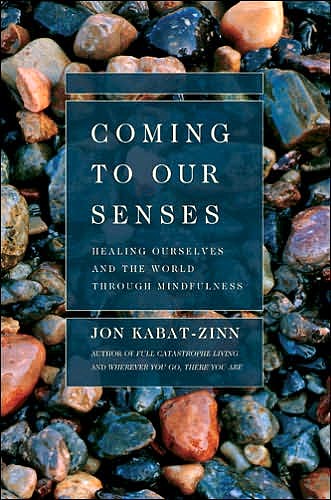
Coming To Our Senses

I haven't read a book in ages. Which is odd for me as I'm a bookaholic. On the Camino I felt like reading hardly anything at all, except my guide book - though, as you know, I was inspired to do a bit of writing. Being bombarded with Spanish all the time could be wearisome - especially since I have no confident grasp of the language. So, for a time, I turned away from the written word, and looked for hidden, unwritten words in outer and inner landscapes, words skulking behind situations and moods, words haunting broken conversations. And often I sank for days into the mire, or the nirvana, of the word-less, which was sometimes scary, and sometimes liberating and peaceful.

But I knew that I would always come back to words, for I love them, and I try to make sense of the world through them. (Though I'm aware, like all instruments of interpretation and perception, words are only a partial way of embracing 'What Is'.) The wonder of words and language is one of our greatest wonders. Words and language make us human.

Needing to engage again with a good, fat book, I picked up Jon Kabat-Zinn's Coming To Our Senses, and I'm very glad I did. There's a saying about the Camino that it doesn't always give you what you want, but it does gives you what you need. Well, I wasn't really sure I wanted to read this book - dammit, it's 600 pages of dense text! - but, sure as hell, I probably do need it right now.

At one time I used to sell a lot of 'Mind, Body and Spirit' titles, various 'alternative', left-field books, and other assorted esoterica to bookshops in the UK, so I've a general, if superficial, knowledge of the subject. In this area it can be difficult locating the diamonds in the dross, separating the charlatans from the real gurus, telling apart those with true spiritual insight from those with just a secular yen to be on Oprah and earn lots of lovely dollars.

Truth to tell, since I came back to England I haven't felt very well for one reason or another. But I feel this might be the very book to banish those post-Camino blues. It's about mindfulness, meditation, Buddhism, awareness, happiness, healing, lovingkindness, yoga, freedom - and anything and everything that's part of the human soma and psyche. Perhaps in reading it I may at last come to some small understanding of my recent, difficult Camino...

Wednesday, 24 March 2010

Camino People (3)


I reached Zafra on Wednesday 20 January. To get there I walked the last few kilometres beside the railway line. An unpromising entrance: dog turds, rubbish dumps, stacked sections of railway track in the ill-kempt station yard. I tried to climb a locked metal gate, but eventually found the right way through. There was a long - a very long - street leading to the town centre. I was tired and wanted a shower, a beer, a bite to eat. I booked into the Hostal Carmen, and was given a lovely double room - with heating! This was more like a nice hotel than a hostal. The first thing I noticed above my bed was this picture - monogrammed 'FW', the initials of my father, who died just over a year ago, and to whom I dedicated this pilgrimage...

Later I found a groovy new bar - with gorgeous, soft red wine de la casa, and tapas to-die-for. The girl behind the bar was the owner of the place, and she was as welcoming as sunshine, smiling and open as summer sunflowers, black-haired and beautiful. She beckoned a regular customer from Barcelona to join me. We talked about this and that, about the Camino, the weather, the town of Zafra - and how it was just like a miniature version of Seville.

And later still, when I came to pay, she told me my Catalan friend - who had left some minutes before - had paid for me. I expressed my gratitude and astonishment. She winked, with an amused look on her face. 'Es España!' she beamed.

Tuesday, 23 March 2010

Camino People (2)

I stumbled into the pueblo late one afternoon. It was cold and had just started raining. It had been a hard day through puddles and mud. I entered one of the pueblo's two bars and put my jacket to dry on a chair in front of the radiator. The architect was already there with a drink and cigarettes. He looked angelic with his curly hair and soulful eyes. I ordered a beer. He told me to go to the priest's house just across the street. 'How would I recognize it?' 'You can't miss it. There's a bloody great cross outside. But don't sleep in the albergue behind the house. Put your stuff in the little room above the kitchen. There are a couple of bunk beds in there, and it's a bit warmer.' So this I did.

Then I didn't know what to do. Outside it was cold, wet and windy. Nothing was happening on the streets. Except paper bags blowing around and the big cross shaking slightly in the wind. Inside it was warmer. But not that much. So I burrowed into my sleeping bag and had a lie-down. This is ridiculous! I told myself. In your sleeping bag at 6 o'clock? So I had a shower, read a book, and tried to write a poem. The priest had invited me to dinner at 9. The minutes seemed to crawl by. Finally at 9.30 the teacher knocked at my door. 'Dinner!'

I joined them all at table in the priest's cosy living/dining room - the architect, the priest, the teacher. And the cook. A fire blazed in a huge open fireplace in one corner. On the table was a platter of beetroot and asparagus, some freshly-made fried eggs, a big bowl of home-made chips, a bottle of wine, a jug of water. 'Help yourself! Tuck in!' All men together. Arms on the table. Smoke between courses. Smoke between mouthfuls! The architect, the priest, the teacher, the cook. And now the pilgrim. (Sounds like that Peter Greenaway film. What was it called? The Cook, The Thief, The Wife And Her Lover? But no wives here. For tonight, this was an exclusively male preserve.)

The cook was wild and extraordinary. He reminded me of a younger version of Father Jack Hackett from the TV comedy series Father Ted. We spoke in a weird hybrid of Spanish, English, French and German. The cook had spent 20 years as a barman serving drinks to the tourists on the Costa Brava. 'Never again!' He fetched some huge chunks of pig meat, which the priest threw on the grill above the hot embers of the fire. It was soon ready. We gorged on the succulent pork and gnawed on the bones. Later we drank strong, black coffee, and the priest disappeared - to reappear with a strong, colourless alcohol in a plastic Coke bottle. We drank. A great evening. A memorable evening. And so to bed...

The next morning I breakfasted with the priest. Melon, oranges, a meat pasty, yoghurt, café con leche. He gave me some fruit and the rest of the meat pasty for my packed lunch. He enquired if I wanted, perhaps, to return as a voluntary hospitalero? He asked for no money. It was free to stay there. (But I left 12 euros in the donation box.) He showed me the rest of the house, the renovations, the old wooden cart which was being restored and repainted. He was a kind man, a good man. A very good man. And an intellectual man. His shelves were full of religious books, historical books, books about Don Quixote. Then I stepped outside into the damp, foggy air, and set off once more along the Camino...

It had been yet another unrepeatable, unforgettable night on the Vía de la Plata...

(My photo shows the priest on the left and the cook on the right.)

Tuesday, 16 March 2010

Camino People (1)

The Camino's about self-discovery, and it's also about the discovery of landscape. (The two are interlinked.) Walking long distances over several weeks or months through a particular landscape is a unique experience. There's no more intimate way to explore a country, and to understand it, than when its earth is under your boot soles. The relatively slow pace of walking is just the right speed - not too fast so you miss things, not too slow so you get bored.

I love walking. For me it's a near perfect activity. I've found places and seen things while walking you would never, ever find or see if journeying by car - or even by bike. I feel privileged. But, as well as the landscape (which may be beautiful or scarred, mundane or marvellous - it's all part of the Camino), there are the people populating that landscape, and this is the most important thing of all...

It must be said that the people along the Camino are a pretty amazing bunch. OK, as in life generally, they're not all kind and friendly and helpful. But many of them are. You'd be amazed how many times when you're lost at some crossroads, with no scallop shell or yellow arrow in sight, a 4 x 4 pulls up in a cloud of dust (you may not have seen any other vehicle for hours) and someone jumps out and indicates the right way. Not only that, but that someone often wants to know all about you, where you've come from, where you're going, and leaves you with a pat on the back and a warm 'Welcome to Spain, peregrino!'

In any remote pueblo, if you're dithering before two turnings, wondering which way's the exit from the village, you can bet your life shutters will rattle, and some incredibly old Spanish lady will silently gesticulate, and point out the correct path. It happens all the time...

The people along the Camino are its very heart and soul. Here are a few of them I met on my recent trip. This is the indomitable Elena from the Bar Ruta de la Plata in Carcaboso...


Women rule the bars in Spain. While the bar owner is smoking, chatting and playing cards, his wife will be dashing hither and thither, carrying four glasses in each hand, multi-tasking like mad, yet still managing to greet every customer, control any boisterous drinkers, heat up some tapas in the microwave, sell some lottery tickets, switch on the cigarette machine with the zapper, and bang down 20 saucers - with spoons and sugar sachets - on the counter, in preparation for the next wave of coffee addicts...

On Sunday 31 January I entered Carcaboso's Bar Ruta de la Plata completely exhausted. I summoned what little Spanish I could muster, and asked about rooms and prices and all sorts of ridiculous things that for some reason seemed important to me at the time. Elena's son, who helped run the bar, inspected me with amusement. 'Tranquilo!' he said. 'Tranquilo!' he repeated, as he helped me off with my backpack. He placed a beer, and some nuts and sunflower seeds, in front of me. 'Tranquilo! Tranquilo!' Later they found me a room, and showed me where I could eat, and Elena spent half an hour drawing a map of the next day's route, and in the morning she made me a lovely packed lunch...

And this is Mañuela, the hospitalera at the private albergue in Calzada de Béjar. I was the only pilgrim there, but she spent ages lighting and tending to a wood burning stove (though it was still freezing in the dormitory), and later preparing a meal from scratch - simple chicken soup, then a tortilla de patatas, but all home-made and delicious...


And here's Mari Carmen de la Iglesia from the new Casa Rural (called VII Carreras) in San Pedro de Rozados, one of the nicest places I stayed. The welcome was warm. The tapas at the bar were tasty - spiced black sausage (morcilla), tortilla, croquetas... The rooms were superb - all individual, with hot showers and radiators (made a change from all the nights I'd shivered in my sleeping bag in the freezing cold), a smart tiled floor, a comfortable bed. As soon as I arrived Mari Carmen asked me if I wanted any washing done - which she did free of charge in her washing machine. And later I had excellent fish soup... (Chicken soup? Now fish soup? Do pilgrims drink soup all the time? Well... yes! Camino lovers will know what I mean...)


Finally, here's pilgrim Agustin, the master chef from Sunday's post, king of the chorizo, sovereign of the sausage, prince of the pork fat...

Monday, 15 March 2010

When In Doubt, Blame The Weather!

I've been trying to assess the significance of this latest Camino and the effect it's had on me. But I can't. As usual, no doubt, these things will reveal themselves slowly over time. But I'm certain of one thing: it was hard.

Which is interesting. Because, in some ways, you might at first think my other two Caminos were more testing - with a heavier backpack, ill-fitting boots, and steeper, more numerous ascents and descents. This time my pack was lighter, my boots were comfortable and problem-free (though they did let in water and started to come apart towards the end), and the terrain was relatively flat.

I think the difficulty lay in the time of year at which I walked. (I had no choice but to go in January and February, by the way.) My first two Caminos were done in the autumn/early wintertime. There was very little rain, and the days were bright and sunny - perhaps cold to start with, but often warming up late morning, particularly in the French sections.

On this Camino I walked through a Spain that was undergoing one of its worst winters for years. Rain had drenched the land, making some tracks waterlogged and some streams impassable. It's tiring to concentrate hour after hour just on where to put your feet. And, apart from a few mild days in Andalusia at the beginning of the trail, it was cold. It grew colder and colder the further north I travelled. There were days of blue skies, as my videos show - but it gradually got colder, and wetter, and foggier, and windier, the nearer I approached Galicia.

What finally did it for me was overnight snow at Padornelo - which meant 20 miles of road walking to the next hostal, as the path was blocked. And even the road was no easy option. I was slipping and sliding in the slush. At one point a Guardia Civil police car stopped and asked if I was OK. And did I want a lift? Naturally, I refused!

Right, they're the negative bits out of the way. Let's get on to the positive bits. I think you're going to be surprised, for I had some truly heart-warming experiences...

Sunday, 14 March 2010

Food And Love

The subject of food's a strange and fascinating one, isn't it? I've been occupied with it lately while experimenting with various different recipes at home. And thoughts of food loomed large on my recent Camino trip. Because the weather was challenging, and because I was on my own much of the time, I used food and drink as things to look forward to each evening: a reward for my efforts, a kind of comfort blanket. On my other Caminos I've always lost weight - half a stone or more. But not on this one.

There are two relentless, unignorable animal hungers in our lives, and one of them's to have our stomachs filled. (The other one is the irrepressible, primeval desire - to go ballroom dancing! I joke, of course...)

Food can be a joyous thing. But it's not actually about fancy restaurants, complicated recipes, complex, diverse or expensive ingredients, culinary knowledge, technique and skill, dinner party one-upmanship, celebrity chefs in hot competition with each other. No, it's not about these things at all.

Occasionally I've eaten in a posh restaurant or two - when I worked in publishing - and sometimes they're good, but often they can be disappointing. If I was paying for myself, I'd rather spend the money elsewhere. Also, it can sometimes seem rather obscene to be sitting there debating whether you want the pan-fried pigeon or the pancetta-wrapped tuna - when much of the world is struggling to survive on seeds and roots.

No, at heart, mealtimes aren't really about food, are they? Food's the peg to hang them on - but really they're much more about sharing, companionship and conversation. They're certainly not about competition.

The value of food is nothing to do with money. It's nothing to do with the food's scarcity, or complexity, or diversity, or subtlety. It's simply to do with the love that's been put into preparing it. And that's all. Really it is.

A few weeks ago, in the albergue at Tábara, a Spanish pilgrim called Agustin I'd met insisted on making us both a meal. We shopped for the food together. It was fun. Later he fried, in very hot oil, chunks of chorizo and salted belly pork, then added a tomate frito sauce from a carton (Why can't we get this in the UK? Perhaps we can and I just haven't noticed). We accompanied it with heaps of al dente spaghetti and a bottle of red wine. And it was one the best meals I've ever had in my life.

Love and companionship...